Modular Office vs Office Trailer vs Portable Office: What’s the Difference?
Office trailers, modular office buildings, and portable offices are three distinct products. Here's how they differ and how to pick the right one for your project.
Ask AI about Nadler

Optimize performance. Reduce downtime.
Subscribe to receive actionable insights and proven strategies for more efficient and reliable operations.
These three terms are often used interchangeably, but they describe different products that serve specific needs. An office trailer is a single unit mounted on a wheeled chassis, designed to be towed and set up quickly. A modular office building is assembled from multiple sections, sits on a foundation or piers, and works better for larger or longer-term needs. A portable office, also called a ground-level office or container office, is typically built from a modified shipping container, sits directly on the ground, and requires no stairs. The right choice depends on how long you need the space, how large it needs to be, and what your site can accommodate.
But first, a quick note on terminology
The modular space industry has a naming problem. “Portable office,” “modular office,” and “office trailer” are often used interchangeably across marketing materials, search results, and even by rental companies themselves, making comparison shopping harder than it needs to be.
For this guide, we’re using the most widely accepted definitions in the industry. So, if a provider you’re talking to uses different wording, it’s worth asking exactly what structure you’re looking at. Now that we are on the same page, let’s dive in!
What is an office trailer?
How office trailers work
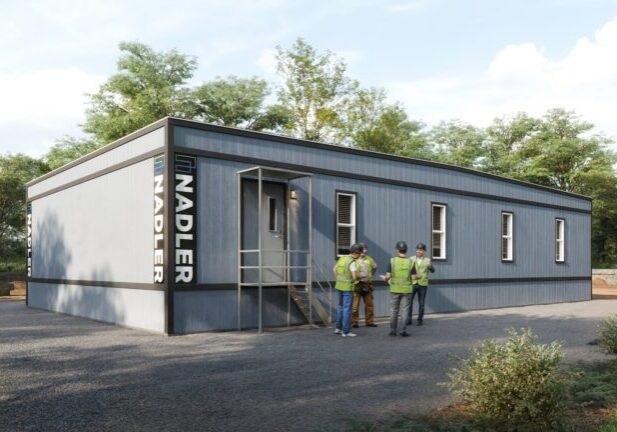
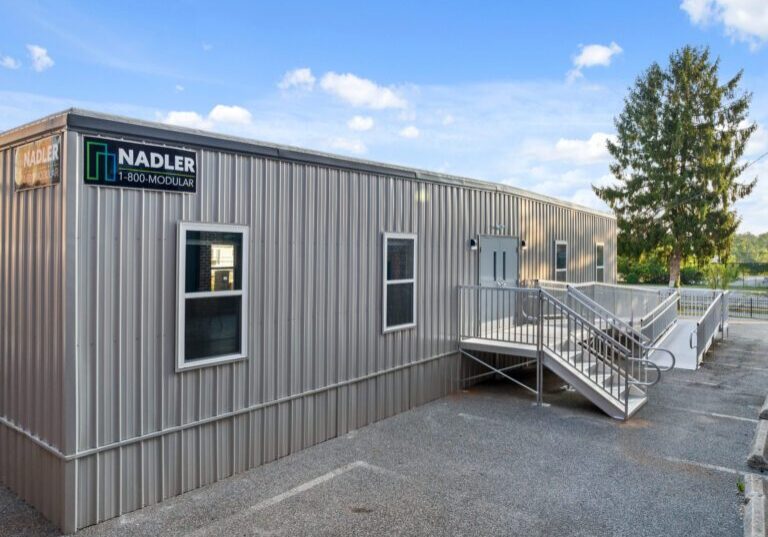
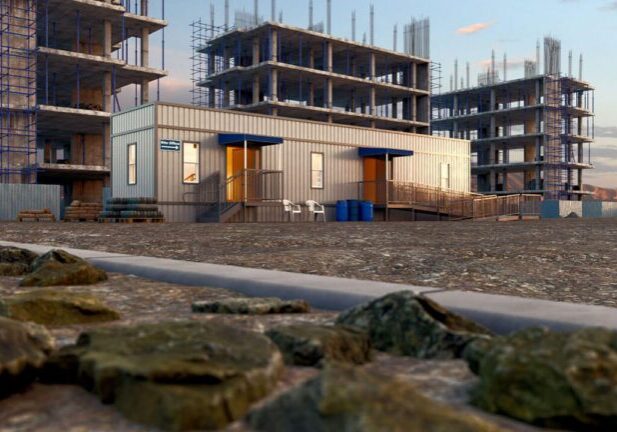
Office trailers are built on a steel rolling chassis with wheels and a hitch, which means a standard truck can tow them directly to your site. Once on-site, the trailer is unhitched, leveled, and connected to utilities. Because the unit sits on a chassis rather than a foundation, it’s elevated — OSHA-compliant stairs or a ramp are required for entry. The chassis-based design allows trailers to adapt to the dynamism of your project: if it moves, they can move with it. This is especially advantageous for multi-phase construction sites or when you’re not sure how long you’ll be at a given location.
Typical sizes and configurations
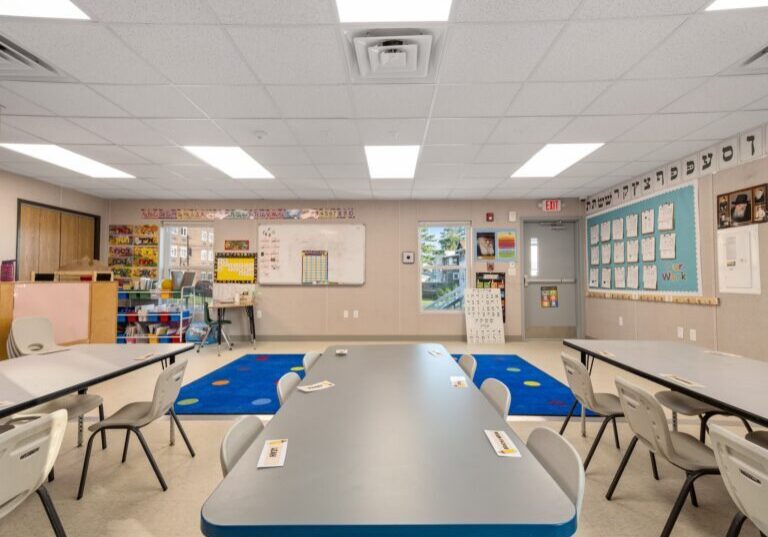
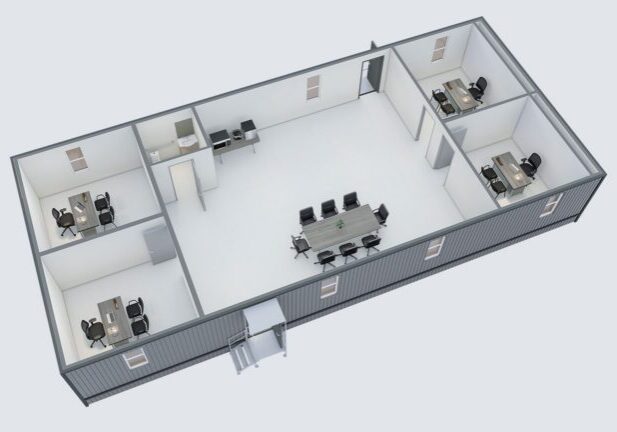
Nadler’s office trailer fleet runs from 12×44 ft (528 sq ft) up to 48×60 ft (2,880 sq ft). Configurations include single-wide units, double-wides (two trailers joined side-by-side), and multi-story stacked setups for larger sites. Interior layouts can include open office space, private offices, a conference room, and ADA-compliant restrooms, depending on size.
When to choose office trailers
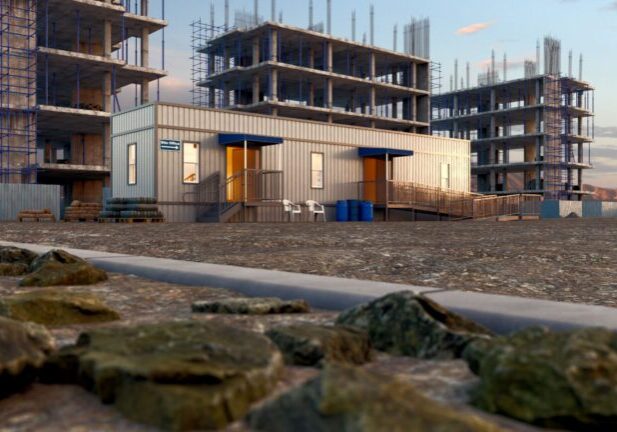
- Construction site field offices for project managers and supervisors
- Short-to-medium-term use (weeks to 1–2 years)
- Sites where the trailer may need to relocate mid-project
- Situations where rapid delivery matters (Nadler’s delivery window is typically 1–4 weeks)
What is a modular office building?

How modular offices are built and delivered
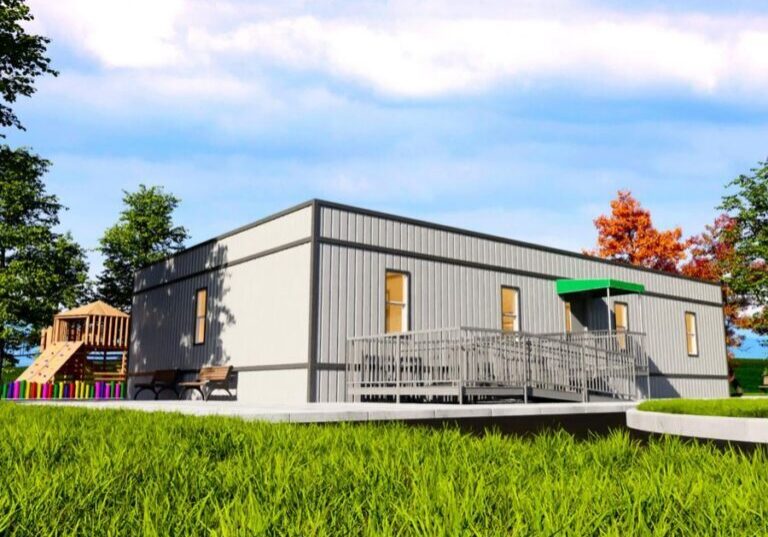
A modular office building is made up of two or more factory-built sections (modules) that are transported to the site and assembled together. Unlike a trailer, it doesn’t arrive as a single towed unit: each module ships separately and is connected on-site, usually on a foundation, concrete piers, or I-beams.
The result is a structure that looks and operates like a permanent building. Interior finishes, mechanical systems, and layouts are customized during manufacturing, reducing on-site construction time compared to traditional builds. Nadler’s lead time for multi-module delivery is 1 to 4 weeks, with installation taking an additional 2 days per module.
Sizes and configurations
Because modular buildings stack and combine modules, they allow significant scale-up. Two-story configurations are common, and layouts can include full office suites, conference rooms, server rooms, restrooms, break rooms, and more. If your project demands both flexibility and sustained stability, this is the ideal setup.
When to choose modular offices
- Projects requiring 2,000+ sq ft of office space
- Longer-term needs (18 months to several years)
- Sites where a more professional, permanent-looking structure matters (e.g., corporate HQs, hospital annexes, government facilities)
- Planned phased expansion — modular buildings can be altered to add new modules over time
What is a portable office?
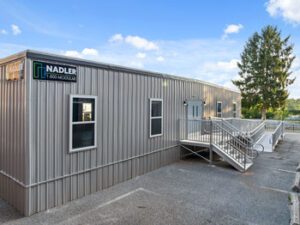
Portable office vs. office trailer: how they differ
This is where terminology causes the most confusion. In general use, “portable office” sometimes refers to any relocatable workspace, including trailers. But in product-specific terms, a portable office most commonly refers to a ground-level unit: a workspace that sits directly on the ground with no chassis, no wheels, and no stairs required.
Here is the easiest way to tell them apart: if it has a hitch and wheels, it’s a trailer. If it sits flat on the ground and is delivered by a flatbed or crane-set, it’s a portable office or container office. The access difference matters for ADA compliance, OSHA requirements, and sites with uneven terrain.
Ground-level office containers explained
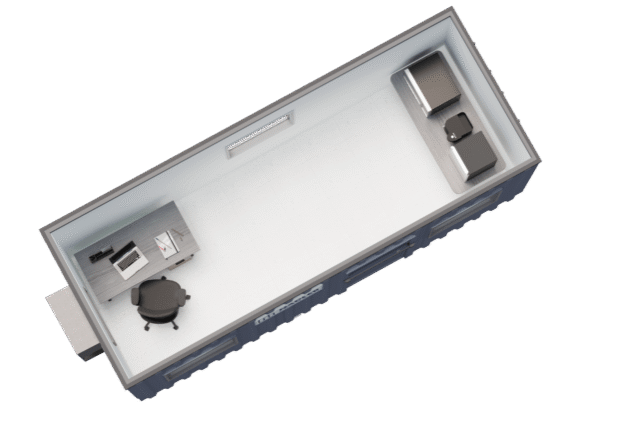
Most portable offices of this type start as modified steel shipping containers (20 ft or 40 ft). They’re converted with insulation, HVAC, lighting, windows, and interior finishes. Since they’re steel construction throughout, they’re more durable in harsh environments than vinyl-sided trailers. Nadler offers these as Shipping Container Offices.
As they sit at ground level, they require minimal prep: an accessible, clear site with a flat surface is typically sufficient — no OSHA stair installation needed, which reduces both setup cost and time.
When to choose portable offices
- Sites with limited overhead clearance where delivering stairs isn’t practical
- Locations where ADA ground-level access is required or preferred
- Harsh outdoor environments where steel construction holds up better
- Security-sensitive sites — steel construction is harder to breach than vinyl
- Short-to-medium-term use, where an all-in-one delivery (no stair installation) saves time and cost
Side-by-side comparison
| Feature | Office Trailer | Modular Office Building | Portable Office (Container) |
|---|---|---|---|
| Construction | Vinyl/wood on rolling chassis | Factory-built modules, multi-section | Modified steel shipping container |
| Entry | Elevated — stairs/ramp required | Stairs or ramp, depending on config | Ground-level, no stairs needed |
| Typical sizes | 12×44 to 48×60 ft (single unit) | Scalable via multi-module | 20 ft or 40 ft per unit |
| Mobility | High — towed by truck, easily relocated | Moderate — can be relocated, more involved | Moderate — crane-set or flatbed |
| Best for | Short/medium-term, site mobility | Larger spaces, long-term use | Harsh sites, ground-level access |
| Delivery speed | 1–4 weeks (Nadler) | 2–6 weeks (Nadler) | <1 week (Nadler) |
| Site prep | Blocking, leveling, stairs | Foundation or piers, utilities | Level firm ground, minimal prep |
| Rent or buy | Both available | Both available | Both available |
Which option should you choose?
You may use the comparison table as a practical reference, but most buying decisions come down to three questions: How long do you need it? How spacious does it need to be? What are your site constraints?
If your project is short-term and you need to move fast
An office trailer is usually the right call. They’re the most widely available option, delivery timelines are short (Nadler’s standard is 1–4 weeks), and they can be relocated if the project moves. Ideal for construction site offices, crew facilities, or temporary swing space during a renovation — trailers are the standard choice for a reason.
If you need a larger, more permanent workspace
The benefits of a modular office building prove valuable when you’re outfitting a full team, need multiple rooms and amenities, or expect to be on-site for two or more years. The upfront setup is more complex, but the result is a workspace that functions like a real building instead of a temporary fix. This is also the right category if you’re considering a permanent or semi-permanent structure under Nadler’s permanent modular division.
If ground-level access or site restrictions matter
Portable container offices are worth a closer look if your site has low overhead clearance, if ADA ground-level access is required, or if the environment is harsh enough that steel construction would make a real difference. They also work well when you need to simplify setup: no stair installation, minimal site prep, and a single delivery event.
Rent vs. buy: how to think about it
For most temporary applications, renting makes more financial sense than buying. Rental keeps your capital free, shifts maintenance responsibility to the provider, and avoids the logistics of resale when the project ends. At Nadler, we offer up to a 12-month rate lock on leases, so your monthly cost won’t increase mid-project.
Buying starts to make sense when you’re looking at long-term or repeated use — typically when the total rental cost over 48 months would exceed the purchase price.
Both options are available across all three product types via Nadler.
Frequently asked questions
What’s the difference between an office trailer and a modular office?
An office trailer is a single unit on a rolling chassis, designed to be towed and set up quickly. A modular office building is assembled from multiple factory-built sections and is better suited for larger footprints and longer-term use. Office trailers are easier to relocate; modular buildings are more scalable.
Is a portable office the same as an office trailer?
Not exactly. In everyday use, the terms might overlap, but a portable office most often refers to a ground-level unit — generally a modified shipping container — that sits flat on the ground with no stairs required. An office trailer is elevated on a chassis. The main practical difference is entry access and site prep requirements.
Which is cheaper: an office trailer or a modular office building?
Office trailers generally have lower upfront costs and shorter rental lead times. Modular buildings require more setup investment but are more cost-effective for larger spaces and longer durations. The right answer depends on your square footage needs and how long the space is required.
Can I rent a portable office or do I have to buy?
You can do either. Nadler offers rental and purchase options across all three product types. For short-term projects, rental is usually the more practical choice. For repeated or long-term use, buying may make more financial sense.
How long does it take to deliver an office trailer?
Nadler’s standard delivery window for office trailers is 1–4 weeks, depending on availability, customization, and location. Delivery times for modular office buildings and container offices vary and depend on the scope of the project.
Do I need a permit for a temporary office trailer?
Permitting requirements vary by state, municipality, and duration of use. Many jurisdictions require a permit for any structure on-site, including temporary trailers, particularly for longer installations. If you need guidance on permit requirements for your location, our team at Nadler is one call (or message) away.
What’s the right option for a construction site?
For most construction sites, an office trailer rental or purchase is the go-to choice: quick to deliver, easy to relocate, and available in sizes that fit most site management needs. If the site is large enough to need multiple offices or if the project runs several years, a multi-module setup or modular building is worth considering.
How Nadler can help
At Nadler Modular, we’ve supplied temporary and permanent office space since 1977, across construction, healthcare, government, education, and commercial projects. Our fleet includes office trailers from 12×44 to 48×60 ft, multi-module modular office buildings, and shipping container offices — all available for rent or purchase.
Every order goes through a single point of contact, from initial quote through delivery and installation. For an all-in-one solution, we offer NadlerPlus: a service that covers furnishings, ramps, Wi-Fi, and site accessories on the same invoice, so you’re not coordinating multiple vendors.
Our clients include the US Army, NASA, Turner Construction, Skanska, and the NYC Department of Education. Nadler holds a GSA Schedule Contract for government procurement and has received MBI Awards of Distinction every year since our founding.
If you’re not sure which option fits your project best, a Space Agent can help you sort it out in one call.
Ready to get started? Get a quote at nadlermodular.com