Modular Buildings for Military Bases: Offices, Housing, Barracks, and Swing Space
Nadler builds modular offices, barracks, housing, swing space, medical, and training facilities for US military bases — backed by GSA Schedule 56, TIPS Contract 230902, and 45+ years of modular experience. Here's what we deliver and how federal buyers procure it.
Ask AI about Nadler
 ChatGPT
Get a Quote from Nadler
Building modular for government, education, healthcare, and commercial clients since 1977. Share your project and we'll scope it.
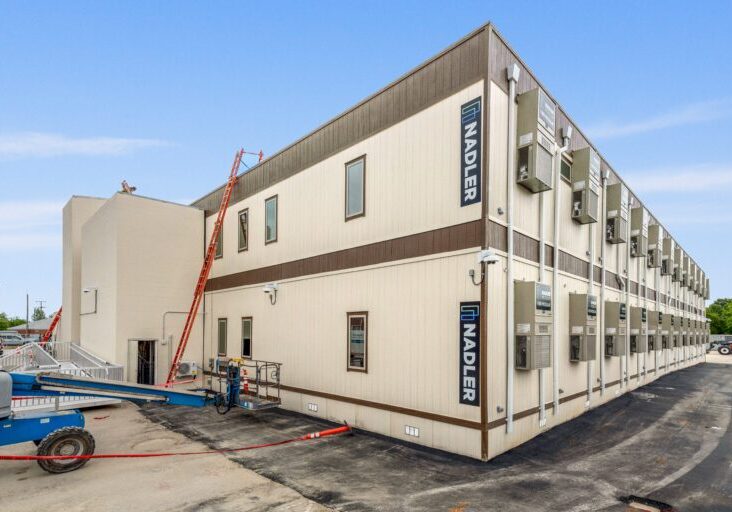
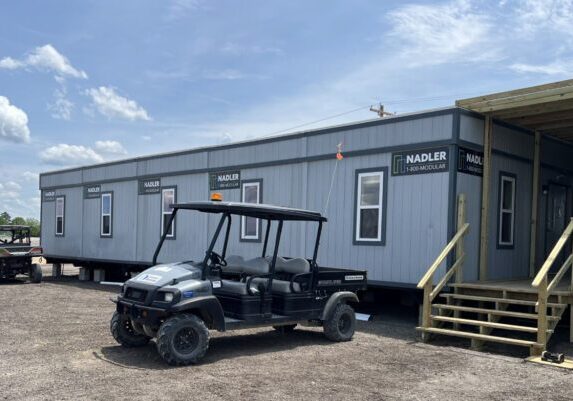
Request a QuoteNadler Modular builds administrative offices, barracks, housing, dormitories, medical facilities, training spaces, dining halls, and swing space for US military bases. We hold GSA Schedule 56 Contract #47QSMS24D00AF and TIPS Cooperative Contract 230902, with over four decades of modular construction experience and published projects for every branch of the US military. Whether your base needs a rapid-deployment unit for a months-long mission or a permanent administrative building designed to outlive the next three commanders, we build both. Modular buildings are part of our full military and defense solutions.
Why modular works for military installations
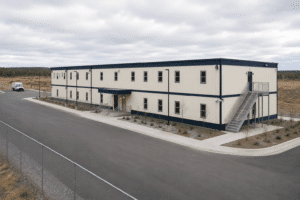
Traditional stick-built construction doesn’t match the operational reality of a military base. Troops rotate, missions change, base realignments redraw footprints every few years. Modular construction matches that reality:
- Schedule compression — factory build runs in parallel with site preparation, delivering most modular projects in weeks rather than months
- Relocatable when needed — buildings can be disassembled and redeployed as mission needs change
- Controlled construction environment — factory manufacturing reduces on-site exposure and the cleared-construction burden on the host base
- Lower lifecycle cost — especially for facilities with a defined operational window
- Meets DoD and federal standards — including UFC 1-200-01 (DoD Building Code), UFC 4-010-01 (Minimum Antiterrorism Standards), NFPA fire codes, and applicable accessibility standards
Modular doesn’t fit every project. Major permanent headquarters buildings, heavily integrated facilities, and specialized classified spaces tend to work better with conventional construction. This page focuses on the work where modular is the best choice.
What we build for military bases
Modular construction covers most of what a base needs outside of heavy industrial and classified-specific facilities. Use cases Nadler has delivered or can deliver include:
Administrative offices and command spaces
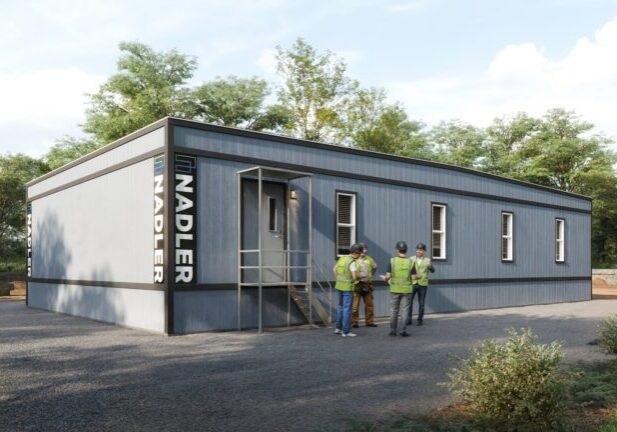
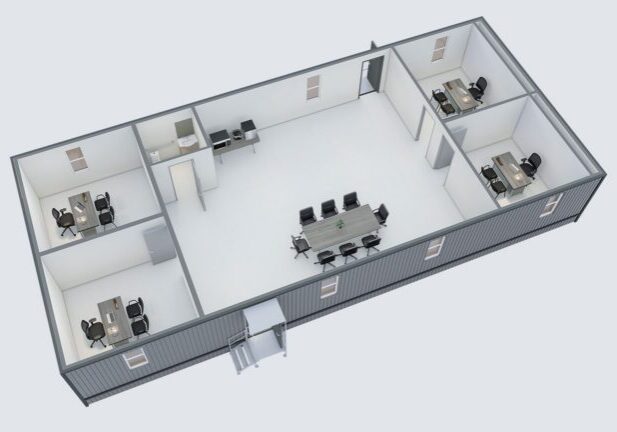
Battalion and brigade headquarters, administrative support offices, information management buildings, conference rooms, and day-to-day command operations spaces. Our typical base modular office buildings run 1,000 to 5,000 square feet, with smaller single-wide units and larger multi-module complexes available when the project calls for it.
Barracks, dormitories, and housing
Troop housing for training rotations, deployment surge, and base expansion. Open-bay barracks, dormitory-style rooms with individual quarters, and mixed configurations. Standard amenities include HVAC, insulated envelopes designed for energy efficiency, laundry integration, and common-area space. For long-term installations, the same construction approach is used in our permanent modular buildings.
Terminology varies by installation — some bases use “barracks,” others use “dormitories,” and “modular housing” is the umbrella term across many federal contracts. At Nadler, we use the terminology your base uses.
Nadler has delivered military and federal housing projects, including a 2-story dormitory at a Georgia training facility and an employee housing project at a large National Park. Project specifics beyond these descriptions can be discussed under appropriate procurement conditions.
Swing space for base renovations and expansions
When a permanent base building is being renovated or replaced, operations can’t stop. Modular swing space keeps administrative staff, medical personnel, or training operations moving while the primary facility is offline. Typical duration runs from months to a few years, with modular units repurposed or removed once the permanent building returns to service.
Swing space is one of the most common and most cost-effective military modular applications. It avoids the cost and disruption of shutting down an operation during renovation, and it avoids the logistical and security problems of leasing off-base space.
Nadler has delivered swing space projects at military installations across the country, including Fort Belvoir in Virginia. Swing space buildings keep operations running while permanent facilities are being renovated, and they’re typically removed or repurposed when the permanent building returns to service.
Medical, dental, and VA facilities
Base clinics, dental facilities, VA outpatient spaces, pharmacy facilities, and medical administrative offices. Healthcare modular requires careful MEP (mechanical, electrical, plumbing) design, infection control considerations, and ADA accessibility. Nadler has delivered federal modular healthcare facilities, including 25 units for the San Juan VA Medical Center in Puerto Rico, designed for tropical environment longevity.
Training facilities and classrooms
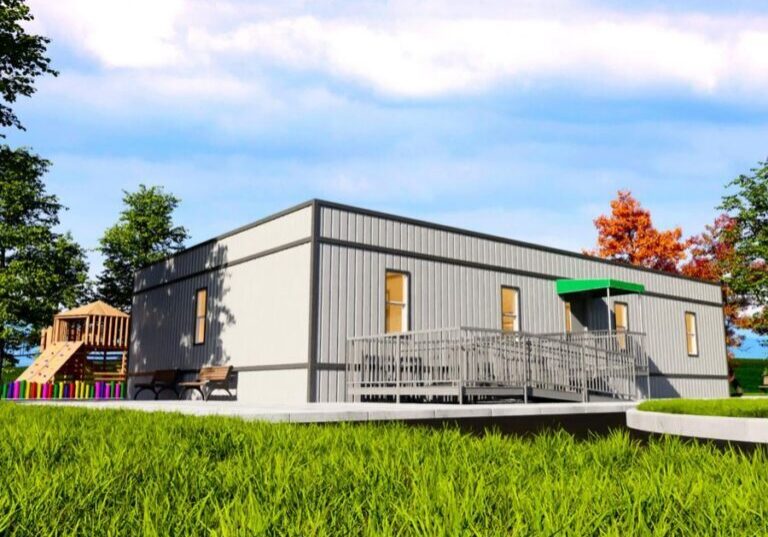
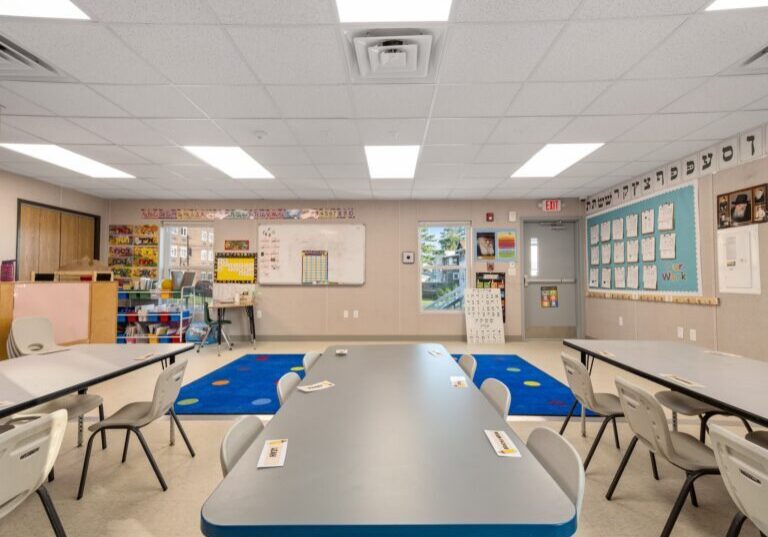
Classrooms for MOS training, simulation spaces, instructor offices, and testing centers. Modular classrooms are a core Nadler product line across multiple verticals — K-12 schools, higher education, corporate training, and military. The same build standards apply.
Dining, mess halls, and recreational spaces
Mess hall expansions, temporary dining facilities during main dining hall renovations, recreation centers, and morale-welfare-recreation (MWR) spaces. Dining modular requires commercial-grade kitchen integration and robust ventilation; recreation spaces allow more configuration flexibility.
Storage, restroom, and support structures
Portable storage containers for equipment and documents, modular restrooms, shower facilities, and support buildings — including shipping container offices for site-deployable workspace. Our NadlerPlus program consolidates these into a single invoice with furnishings and site services — useful on federal contracts where simplified billing reduces administrative overhead.
HAZMAT storage, chemical storage, and lab space
Specialized modular structures for hazardous material storage, chemical storage, and laboratory operations on military and federal sites. These applications require purpose-built ventilation, containment, fire suppression, and material-specific construction details that go beyond standard modular specifications. Available through Nadler for federal and DoD installations with classified or unclassified HAZMAT and lab requirements.
Guard houses and perimeter structures
Gate security buildings, vehicle inspection stations, visitor control centers. Standard construction works for most applications; force-protected or ballistic-rated options are available for higher-threat installations.
Blast-resistant and ballistic-rated guard houses are available through Nadler for purchase. Lease is not currently offered for the rated product line, but standard (non-ballistic) guard structures are available through both purchase and lease.
See Our Military & Federal Project Portfolio
Why federal and military buyers choose Nadler
45+ years in modular
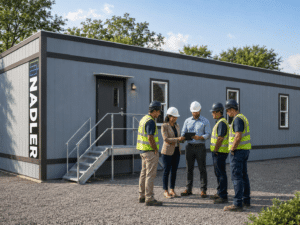
Nadler has been building modular buildings since 1977. That longevity matters for federal buyers in specific ways: multiple contract cycles, multiple generations of DoD and federal building standards, and peer recognition in the form of Modular Building Institute Awards of Distinction every year since the company’s founding — MBI awards are peer-reviewed recognition of project quality across the modular industry, not marketing awards.
Government-certified procurement
Three procurement vehicles are available depending on the project:
- GSA Schedule 56 — Contract #47QSMS24D00AF — 30+ years as an approved GSA vendor
- TIPS Cooperative Contract 230902 — Permanent Modular Buildings category
- Direct procurement on major federal projects — when a Government Field Office or supporting structure is part of a larger contract scope
Safety record that meets federal prequalification
Nadler’s EMR (Experience Modification Rating) is 0.85. Industry standard is 1.0, which is the threshold most federal prequalification processes use. An EMR below 1.0 is a concrete, verifiable signal of a safety-driven vendor. Most modular vendors don’t publish their EMR. Nadler does.
Single point of contact through delivery
Federal buyers work with one Nadler point of contact from first quote through delivery and installation — no bouncing between sales, project management, logistics, and billing. We call them Space Agents: one person owns the relationship the whole way through. That matters when a federal buyer’s own approval chain is long and needs responsiveness on the vendor side.
How to buy: procurement pathways
Nadler is set up to move federal procurement as quickly as possible. Three pathways are available depending on agency requirements:
GSA Schedule 56 — Contract #47QSMS24D00AF
For federal agencies that buy through GSA, Nadler is available on Multiple Award Schedule 56 (Buildings and Building Materials). Pre-negotiated pricing, streamlined ordering, and FAR-compliant procurement. The relevant SIN categories for non-SCIF modular work are summarized through our GSA Schedule 56 program page:
- SIN 361-10A — Storage solutions
- SIN 361-10E — Professional facility solutions (restrooms, showers, laundry)
- SIN 361-50 — Lease/rental of prefabricated buildings
- SIN 361-32 — Installation and site preparation
TIPS Cooperative Contract 230902
TIPS (The Interlocal Purchasing System) is a cooperative vehicle used by governments, schools, and public agencies to buy without running a separate bid process. Nadler’s TIPS contract covers Permanent Modular Buildings and is useful for state, local, and some federal projects where TIPS is accepted.
Direct purchase on major projects
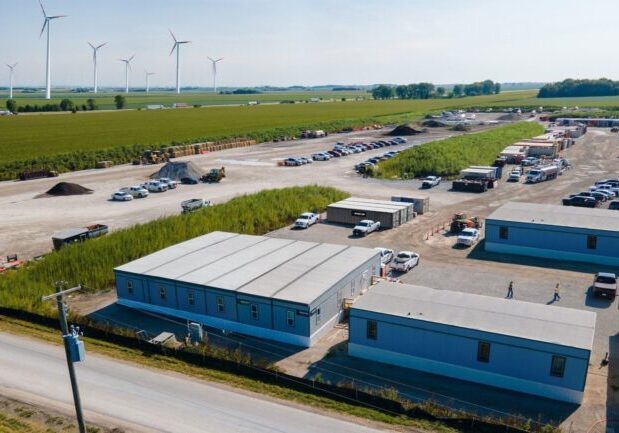
On major federal projects, supporting facilities such as Government Field Offices and Rapid Deployment structures, swing space, housing units, and similar are often procured directly as part of the overall project scope rather than through a separate facilities acquisition. If your project fits this model, Nadler’s Military & Defense team can work with your contracting officer to confirm the pathway.
NY Minority-Owned Business designation
Nadler is a certified New York Minority-Owned Business. For federal buyers with supplier diversity requirements, this designation can count toward meeting small business or MBE goals on the contract.
Proof: military and federal projects we’ve delivered
Selected projects from our military and federal project portfolio:
- Fort Belvoir (Virginia): swing space modular buildings supporting base operations during permanent facility renovations
- Georgia training facility: 2-story modular dormitory for trainee housing
- Large National Park employee housing: modular employee housing for federal park operations
- US Air Force base operations: permanent and temporary modular facilities supporting base operations
- Arlington Cemetery expansion: modular office solutions for a major federal project
- San Juan VA Medical Center: 25 modular units for the Veterans Administration in Puerto Rico, designed for tropical environment longevity
- Amtrak Philadelphia redevelopment: site office support for a major federal infrastructure project
- NJ Police Department: portable office trailer for public safety operations
Our federal portfolio also includes named projects for NASA, the US Army, and the NYC Department of Education, among others.
Request a Consultation with Our Military & Defense Team
Typical project timeline
| Phase | Standard Duration | What Happens |
|---|---|---|
| Initial consultation | 1 business day | First call to understand the scope |
| Quote + design review | 1–2 weeks | Firm quote, floor plan options, delivery window |
| Contract + procurement | Varies by vehicle | GSA, TIPS, or direct procurement — timeline depends on the agency’s process |
| Manufacturing | Varies by project | Factory fabrication runs in parallel with site preparation |
| Site preparation | Parallel with manufacturing | Foundation, utilities, and access coordination |
| Delivery and installation | Days to weeks | On-site assembly and utility connection |
| Occupancy | Week of installation completion | Ready for use; warranty period begins |
A typical 2,000-square-foot military base office runs 3–4 weeks from contract signing to occupancy, with manufacturing running in parallel with site preparation. Larger or more complex projects — multi-module configurations, specialized HVAC requirements, force-protection upgrades — extend the timeline accordingly.
For secure facility requirements, see our dedicated Modular SCIF buildings page.
Start your military base modular project
Nadler Modular has been delivering modular buildings for federal and military clients since 1977. If your base has a facility need — offices, housing, swing space, medical, training, or something else — let’s talk.
Request a Quote for Your Base Project
Our Military & Defense team responds within one business day.
GSA Schedule 56 Contract #47QSMS24D00AF · TIPS Contract 230902 · NY Minority-Owned Business